What guests check before they choose your restaurant
The decision usually takes under two minutes, and it happens somewhere you are probably not looking.
Someone is standing on a street in your town, or sitting in a rental cottage twenty minutes away, deciding where to eat tonight. They have three tabs open and about ninety seconds of patience.
Almost nothing about that moment involves your website's home page.
The decision happens on a phone, in about ninety seconds
They are on Google or Maps. They are looking at photographs, the star rating, the two most recent reviews, whether you are open, and how far away you are. If they get past that, they want the menu and a way to book.
This is worth sitting with, because it means the front door to your restaurant is usually your Google listing rather than your site. Hours that are wrong on a holiday weekend, or photographs uploaded by guests three years ago because you never added your own, are doing more damage than anything on your home page.
If your menu is a PDF, it may as well not exist
The menu is the single most requested thing on any restaurant website, and an enormous number of restaurants serve it as a PDF.
On a phone, a PDF opens in a separate viewer, loads slowly, and renders at a size that requires pinching and dragging to read a single line. Many people give up. Search engines also read PDFs poorly, so the dishes you are known for are effectively invisible when someone searches for them by name near you.
Put the menu on the page as text. Real headings, real prices, updated when the menu changes. It is not a glamorous piece of work and it will do more for your bookings than most things that cost ten times as much.
Hours, parking, and the questions nobody wants to call about
Every restaurant has a set of questions guests would rather resolve online than by phone. Where do I park. Do you have anything for a vegetarian. Can I bring a nine-year-old. Is the patio heated. Do you take walk-ins on a Tuesday. Is there a step at the entrance.
None of these questions are exciting and all of them are decision points. A guest who cannot find the answer does not call. They pick the place that answered.
Hours deserve particular attention because they are the most common thing to be wrong. Holiday hours, seasonal changes, the Monday you now close: if these are right on your site but wrong on Google, Google wins, and someone drives to a locked door and writes about it.
Photographs of food, not of the empty dining room
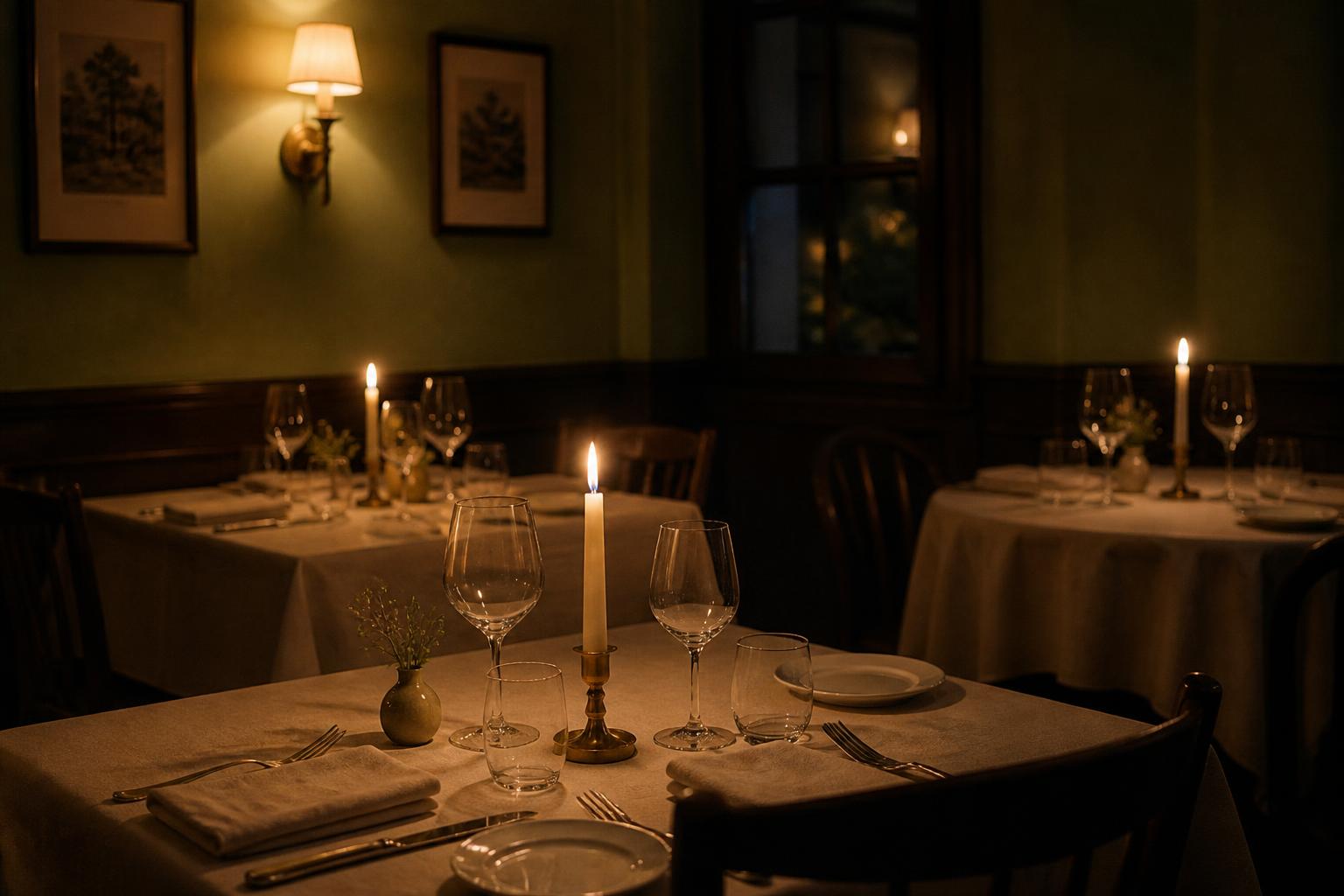
Most restaurant sites lead with a wide shot of a beautifully lit, completely empty room.
Guests are not choosing a room. They are choosing dinner. They want to see the food, the plating, the portion, and enough of the room to read the atmosphere, ideally with people in it. A dining room photographed at four in the afternoon with no one there reads as closed.
This is one of the few places where paying a photographer for one good afternoon returns the cost quickly.
Private dining is your best margin and your worst-marked page
If you take private events, buyouts, or large parties, that is likely your highest-margin business, and it is almost certainly the worst-served part of your website.
Usually it is a line in the footer, or a page with one photograph and an email address. Meanwhile the person planning a rehearsal dinner or a company holiday party is doing the same ninety-second scan as everyone else, and they need capacities, minimums, a sample menu, and a way to inquire that gets an answer.
Treat that page as seriously as the main menu. One recovered private booking is worth a season of covers.
What to change first
Turn your PDF menu into a real page, and check that your hours are correct everywhere they appear.
Neither of these is interesting work. Both of them are being asked about by every guest deciding whether to come tonight.
By Well. Visited.